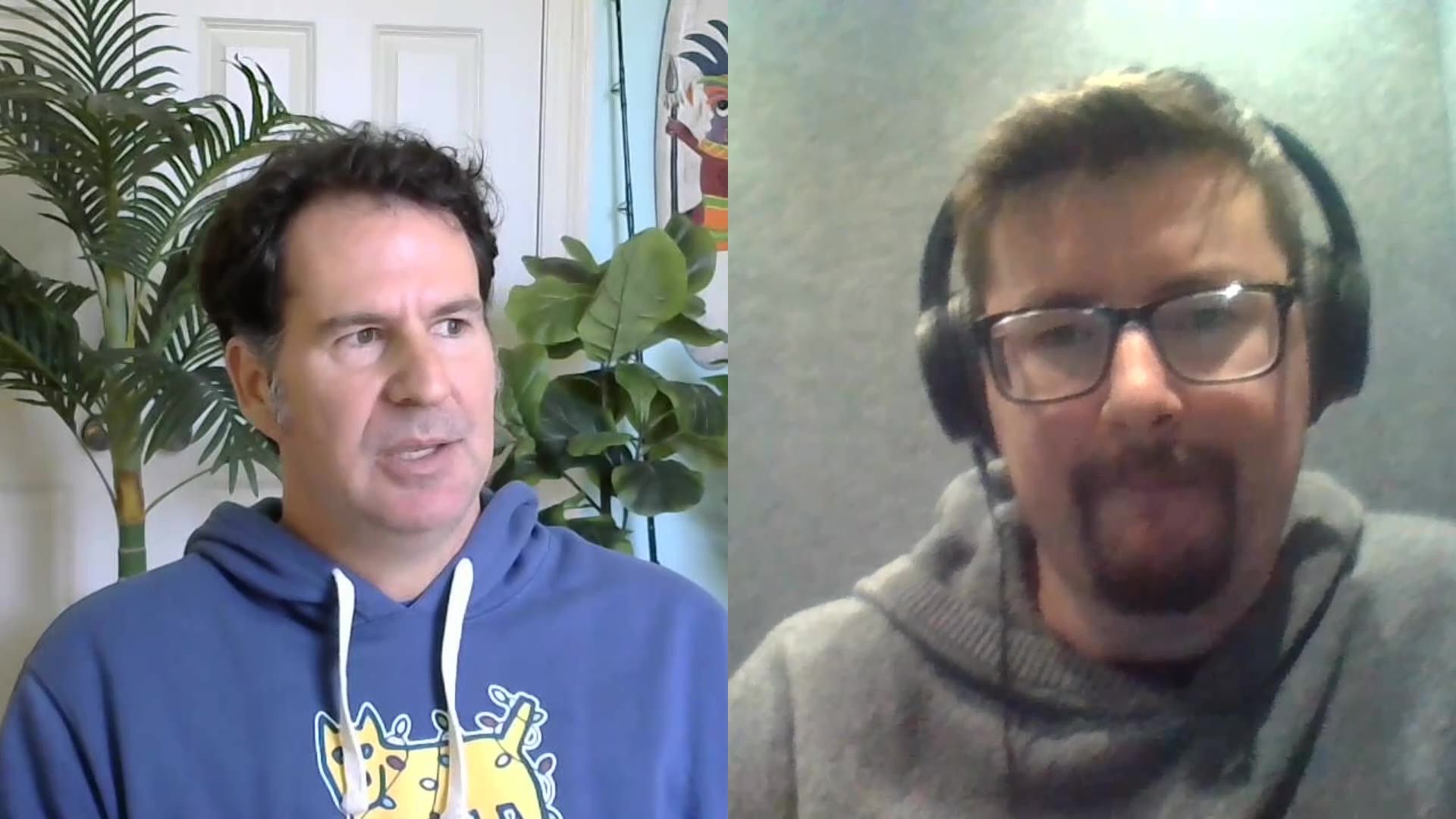
Unscripted SEO. Host: Jeremy Rivera. Guest: Andre Savoie, a 20-year digital marketing agency owner who sold his agency and now coaches and advises business owners directly.
Listen to the episode
Also on Castos. Recorded 20 January 2025.
Ask an agency owner why campaigns fail and you usually hear about the last vendor. Andre Savoie ran a digital marketing agency for 20 years, worked on hundreds of campaigns, and lands somewhere less comfortable: a lot of the time it’s the client. Not because they’re bad people. Because nobody ever told them what a good client actually does.
“No, no, this isn’t a magic show. Like you have to participate and pull your weight for this to work.”
Andre Savoie
That’s the thread through the whole episode. If you hire SEO help, or you sell it, here’s what Andre would tell you before you spend another dollar.
Key takeaways
- Content Andre wrote early in his career, when he treated each piece like a work of art, still shows up in the top two or three results almost 20 years later.
- Half of good SEO advice is telling a client what not to do. The wrong cold pitch can cost thousands of dollars and a year, and undo work that was done right.
- Take inventory before you pick a strategy: your pages, your service area, your photo and video assets, your brand.
- The clients who get the best results show up prepared and participate. Andre teaches a whole section called “are you a bad client?”
- AI is a tool, not a magic pill. It can only work with what is already known, so the new and better ideas still have to come from you.
- The one thing to do today: slow down and take ownership of the process you’re paying for.
Great writing got rewarded, and it still does
Andre came into digital marketing as a writer. Early on he noticed that the pieces he cared most about, the ones he wrote like a work of art, got “magically sucked up into Google” and started ranking. Some of that content is still there, almost 20 years later, in the top two or three results.
Then he watched the other side of the industry: the people promising you could do it easier and faster by cutting corners. Jeremy’s first brush with SEO was a relative swearing that 500 repetitions of a keyword in the meta keywords tag would rank you. (It did, in AltaVista.) Andre’s lesson from those years is simpler. If you take the time to do something right, you get rewarded for it, by and large.
Half the job is telling clients what not to do
Jeremy asked what Andre’s strongest selling point was as an agency owner. His answer: communicating what you need to do and why, and just as much, what you don’t. Every owner gets the inbox full of proposals, the random pitch, and the screen share from the guy with SEMrush showing you numbers. If you can’t tell what a pitch is actually showing you, pull the domain numbers yourself before you believe the screen share.
“If you fall for the wrong one of those, can wind up wasting thousands of dollars in a year of your life and, and undo work that you’ve paid somebody to do correctly.”
Andre Savoie
For Andre the core job never changes: provide something of value. Everything else is detail. And he’s blunt about where the noise is heading. “All the stuff that they’re doing before was bad. And now the AI promises are making it worse.”
Why he sold the agency
After 20 years, Andre hit burnout. He sold the agency on a phased plan, stayed on for a year and a half through the transition, and moved into coaching and private consulting. The other push was repetition. He kept having the same great conversation with one client, then wishing the next ten could hear it too.
He also has no patience for agencies that don’t take their own medicine. “Marketing agencies with crappy websites and then they’re buying cold leads and doing telemarketing.” If you sell digital marketing, you should be able to generate business with it. He calls that professional integrity.
Coaching upscale local businesses
Andre’s clients are small and mid-sized local businesses selling something upscale or optional: lighting showrooms, diamond jewelers, upscale furniture stores, high-end home renovators selling $50,000 kitchen installs. The DNA comes from his parents’ construction company.
“My dad used to tell me like, I’m the most expensive in town and, he never hid from it. And he always said, well, I’m expensive because I want it done right the first time.”
Andre Savoie
His group program teaches thought processes rather than button-clicking, because tactics go out of date. Members bring their campaigns, Google Ads included, and learn how to read their agency’s report and what to ask about it. Most owners don’t know what to expect from a report in the first place, and a report built to be understood is half of that fix. The other half is the client asking.
Are you a bad client?
Two of the first seven modules in Andre’s course are about taking inventory before strategy. You might see a case study in your niche and want to copy it, but the factors behind it may not be your factors. Then comes the uncomfortable one: a section titled “are you a bad client?”
The pattern he describes: an owner hires an agency, says the last one screwed them, then shows up ten minutes late and unprepared asking “what do you got for me?” Andre’s point isn’t to shame anybody. After 20 years on the other side of the table, he can tell you what the happiest clients do, and it isn’t rocket science. Show up, be present, be prepared.
Jeremy has lived the other half. You can’t write unique, relevant content for a business whose owner is in Ibiza for three weeks and won’t do the interview. Andre built his program so an agency could send a struggling client to it without fear of being poached. “It’s like going to the gym,” he says. Learn while you work together, and come back with your feet under you.
AI can only work with the known
Andre doesn’t want to sound like a dinosaur. AI isn’t bad, it’s just not a magic pill, and there’s a garbage in, garbage out problem when the client brings nothing to put in. He closes on a point someone else made to him, and he says so.
“The basic issue with AI at this point is that AI can only work with the known.”
Andre Savoie, passing on a point made to him
Real growth in SEO comes from somebody adding something new, or better. “The new and the unknown works best,” Andre says, and that’s the basis of thought leadership: it comes from the person who’s the expert in that area. Jeremy’s example is an arborist in Austin. Expertise matters, and so does how you translate it.
The one thing to do today
Slow down and breathe, and take ownership of the process. That doesn’t mean wrestling the work away from your SEO. It means you understand it, ask questions, and know what you need to participate in. You wouldn’t hand your accountant or your lawyer a decision you don’t understand, so don’t do it with your marketing. Andre’s practical version: take an extra half hour and use ChatGPT to understand the report your agency sent you.
Watch the full episode
Questions this episode answers
What makes someone a good SEO client?
Andre’s answer is preparation and participation: show up on time, bring what the agency asked for, and take the time to understand what is being done and why.
Can AI write content that ranks on its own?
Not the content that grows a site, in Andre’s view. AI can only work with what is already known; new and better ideas come from the expert.
What should a business owner do before choosing a marketing strategy?
Take inventory first: website pages, service area, photo and video assets and brand, so a case study’s factors aren’t mistaken for your own.
Where to find Andre Savoie
Andre’s site is andresavoie.com, and he’s on LinkedIn. Since this recording he has moved into fractional CMO work for experience-based businesses, and he co-founded Saltwater Marketing for charter fishing and tour operators.
More on this theme: SEO Arcade on why AI only works with the known, Jeremy’s own are you a bad SEO client?, and Joshua Ramsey on narrative as your USP.
About this recap
Every quotation on this page is verbatim from the episode transcript and is Andre Savoie speaking. The episode was recorded in January 2025, so the coaching program and prices he describes reflect that date.